
Dr. Sakyasingha Dasgupta
Why we created RAIDEN™, what we learned along the way, and why chiplets are now key to the future of Physical AI computing.
When we founded EdgeCortix in 2019, the edge AI problem looked very different from the one we are solving today. The prevailing challenge was to make neural-network inference, which normally depended on data-center-class hardware, efficient enough to run close to where data was generated. That was already a difficult problem, and it continues to remain important to this day. Over the past several years, as models have become multimodal, generative, and increasingly capable of reasoning and acting, the principal challenge has shifted toward Physical AI systems that must operate continuously in the real world.
AI is moving beyond understanding and generating information. It is beginning to interact continuously with the physical world. Robots, factories, communications networks, aircraft, autonomous platforms and critical infrastructure increasingly need to perceive what is happening around them, reason about it, make decisions and act. The industry now broadly describes this as Physical AI. Whatever terminology one prefers, the architectural point is increasingly clear: once AI moves into the physical world, the computing problem becomes much larger than running a single inference model. Intelligence has to become part of a complete system that can perceive, reason, and act continuously within the constraints of the physical environment.
For us, the key insight has been that Physical AI is not simply another AI model workload. It is a system workload. Once AI becomes part of a machine that must operate continuously in the real world, the optimization target changes. Peak arithmetic performance still matters, but so do response time, power, data movement, reliability, software longevity, and the ability to run AI and non-AI computation together. We built RAIDEN, our next-generation chiplet-based Physical AI compute platform, because the system, not just the model, has become the main challenge.
For readers who want to discover the platform in detail, including the RAIDEN family, architecture, and specifications: EXPLORE RAIDEN. The configurations and availability roadmap are also covered in our official launch announcement: RAIDEN LAUNCH ANNOUNCEMENT. In this article, I want to focus instead on why we built it, what we learned along the way, and what we believe it says about where Physical AI computing is heading.
The physical world sets the clock
Take a factory robot, for example. It might use vision models to see its environment while also handling sensor data, planning its movements, running control loops, talking to other systems, and checking if its last action worked as expected. These tasks don’t happen separately. The real value comes from the whole loop working together.
This idea goes beyond just robots. An aircraft handling many sensor inputs, a telecom site making decisions on the spot, or an industrial system managing many machines all face the same challenge: the real world doesn’t pause while a model finishes. The system has to keep running. In this way, the physical world sets the pace.
That’s why I don’t think Physical AI is just about swapping the cloud for the edge. The cloud is still crucial for training, big-picture reasoning, simulation, fleet learning, and coordination. What’s changing is that more computing now needs to happen near where data is created and where decisions need to turn into actions. So the real question isn’t just “cloud or edge?” It’s “what should be computed where, and how do these layers connect?”
The missing layer between the machine and the hyperscale cloud
People often see AI computing as having two extremes. On one side, there are embedded processors inside machines. These are close to sensors and use little power, but they can’t handle very complex tasks. On the other side, there are huge data centers with lots of computing power, memory, networking, and cooling, making large-scale AI possible.
Physical AI is creating a new need between these two extremes. Some systems need much more computing power and memory than a typical embedded device, but they still need fast, local responses and a very different power and deployment setup than a big data center. At EdgeCortix, we call this area the Thick Edge, where our ideas come to life.
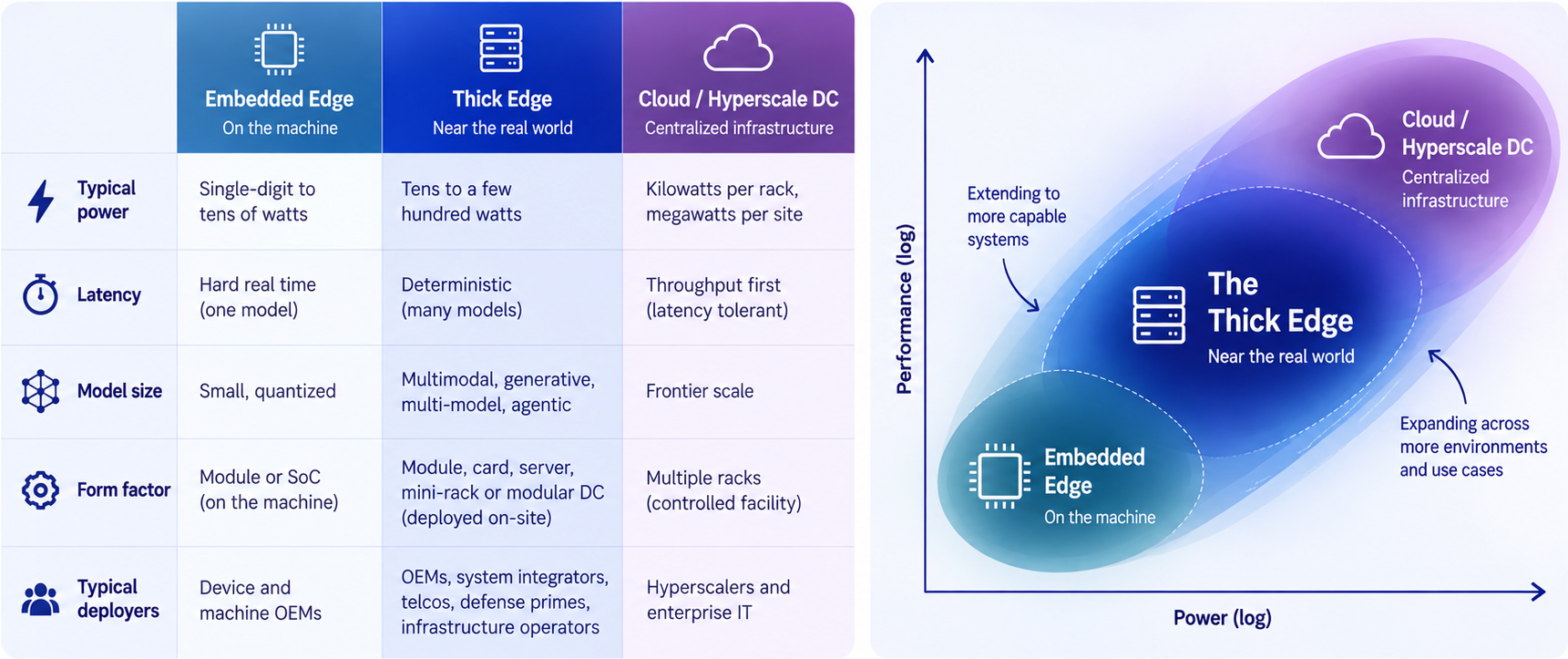
Figure 1: The Thick Edge is expanding as Physical AI demands more compute between embedded systems and hyperscale infrastructure.
It’s now clear to me that the Thick Edge is more than just a type of chip or product. It’s turning into a whole layer of infrastructure. Depending on the use case, this could be a module inside a machine, an accelerator next to a production line, a small rack at a telecom site, or even a modular AI data center near the systems it supports. The main point is that real intelligence needs to be close enough to the physical world to be part of the action.
Physical AI has to scale in two directions
The AI industry has gotten very good at scaling up. We add more computing power to devices, more devices to systems, more systems to racks, and more racks to data centers. Faster connections and bigger clusters have made huge advances in what models can do, and this trend will keep going.
Physical AI brings another challenge. Intelligence now needs to be spread out across factories, networks, autonomous systems, aerospace, infrastructure, and machines. A project might start with computing inside one device, then grow to local as tasks get more complex, and eventually need rack-scale or modular infrastructure near where it’s used. That’s what I mean when I say Physical AI doesn’t just scale up; it also scales out.
This difference is important because “scaling out” here doesn’t just mean adding more servers to a cluster, like in a data center. It means spreading intelligence across different locations and operations in the real world. The system’s design needs to be local enough for quick responses, flexible enough for many environments, and able to grow as models and systems get better. That’s why we built RAIDEN as a platform, not just one accelerator, because this broader approach is needed.
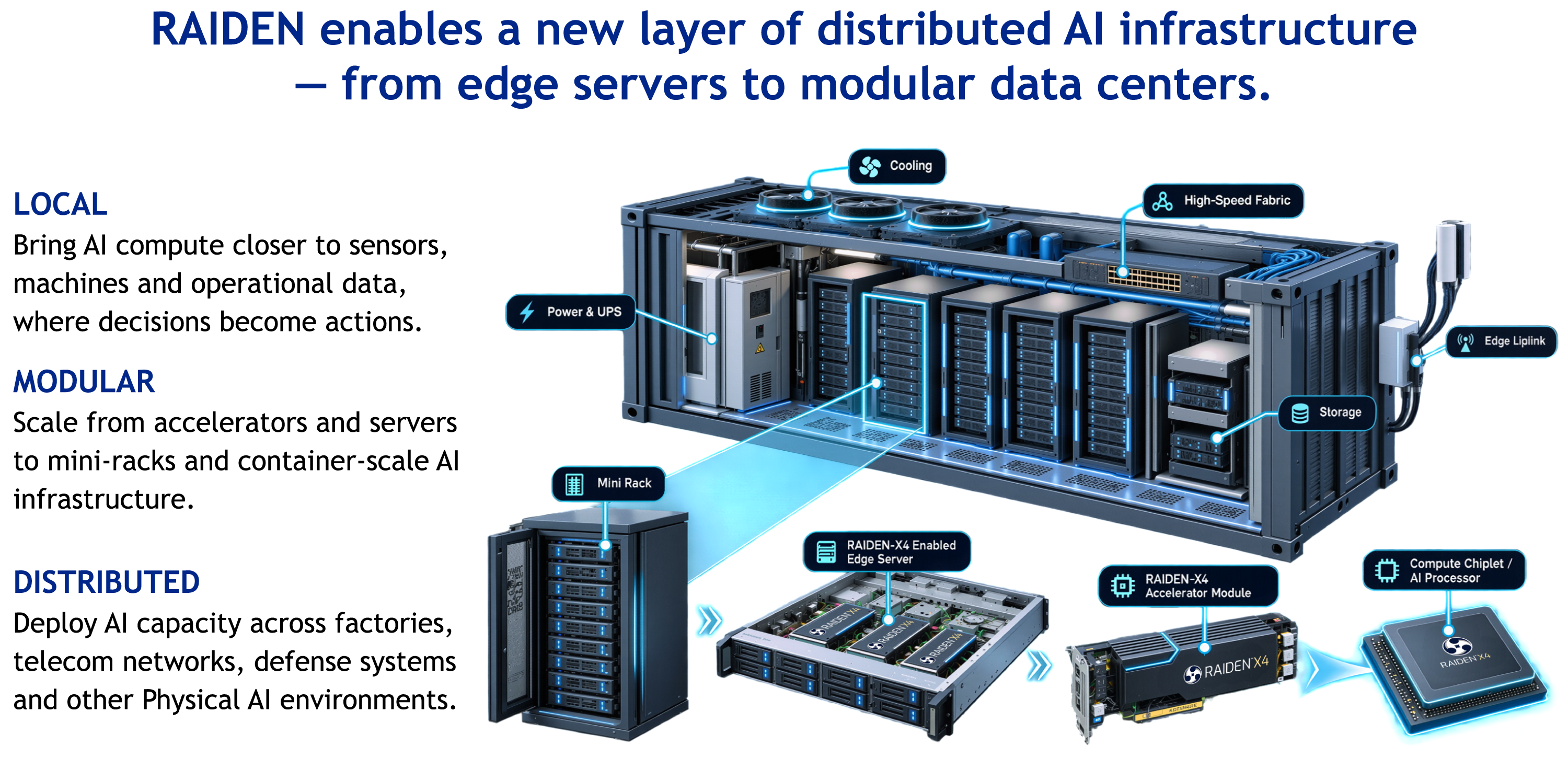
Figure 2: A new infrastructure layer between the intelligent machine and the hyperscale cloud.
What SAKURA taught us, and why RAIDEN is different
RAIDEN didn’t begin with a flashy performance number. It came from what we learned while building our Dynamic Neural Accelerator architecture, the MERA software stack, the SAKURA family, and from working with customers who wanted to put advanced AI into real-world systems.
Those deployments have been valuable teachers. SAKURA-II has gone through NASA-supported heavy-ion testing for radiation resilience and has been integrated into an operationally relevant U.S. Air Force flight demonstration under our Defense Innovation Unit program. We also recently announced a multi-year collaboration with Kawasaki Heavy Industries around next-generation AI-enabled aerospace and defense systems. These are very different environments, but they reinforce the same lesson: when AI leaves the lab and becomes part of a long-lived physical system, the system architecture matters as much as the model.
We kept hearing about three main needs: the ability to scale across different power and size requirements; programmability, since AI changes much faster than hardware design cycles; and reducing data movement, because moving sensor data, model states, and results between memory and processors uses more power, adds delay, and makes systems more complex.
RAIDEN addresses these needs. Its chiplet design lets computing power, memory, and bandwidth scale from one chip to several, all within the same system. It has programmable matrix and vector engines, RISC-V processing, and different computing resources to handle a wide range of tasks as AI evolves. Its shared, high-speed on-chip memory is meant to keep more data close to where it’s needed. The specs are just one part of the story; the real story is optimizing the whole system, not just one benchmark.
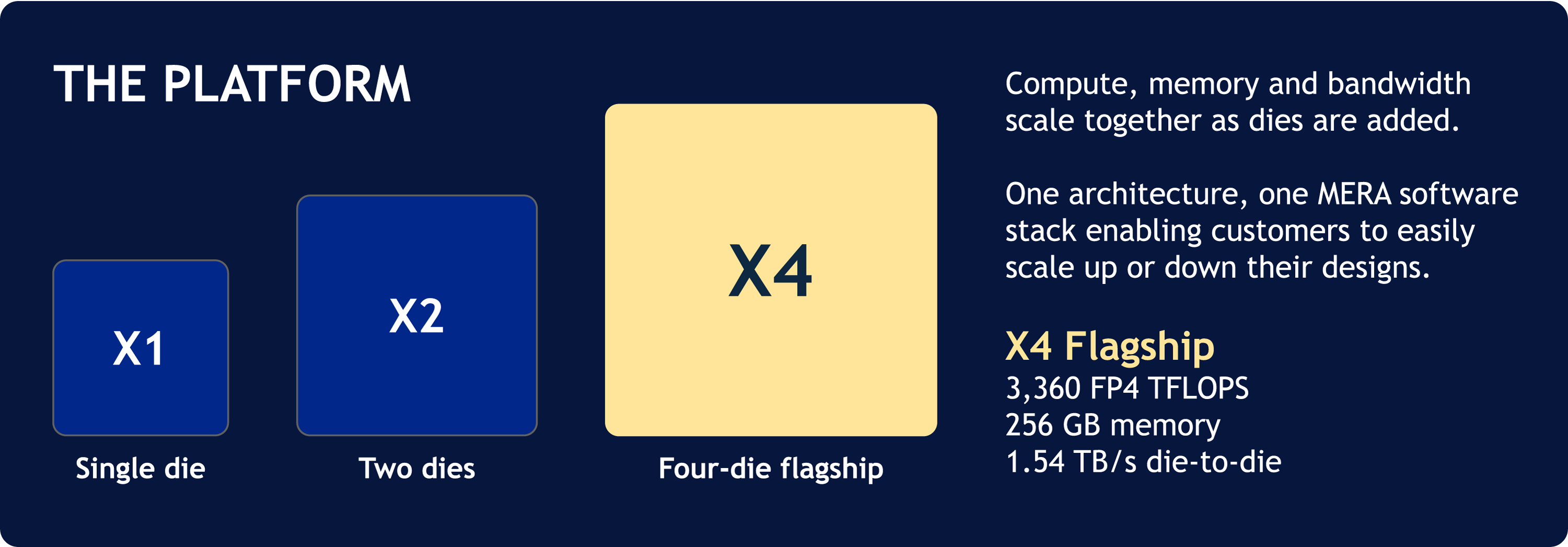
Figure 3: One Architecture, from one die to four. As AI evolves. RAIDEN evolves with it.
Physical AI needs a computer, not only an AI accelerator
For a long time, the industry has focused on how much math an AI processor can do. But as models and systems grow, moving data becomes as important as processing it. Every time data moves across an interface or to external memory, it uses energy and takes time. In a Physical AI system, where many tasks like sensor processing, inference, reasoning, control, and application logic all run at once, these costs add up.
This leads to a greater conclusion that has increasingly shaped our roadmap. A physical system does much more than execute a neural network. It may need matrix processing for AI, vector operations for signal processing and advanced mathematics, general-purpose application processing, communications processing, control, and specialized functions. If each of those functions becomes a separate device behind another interface, we eventually pay for that fragmentation in data movement, software complexity, latency, and power.
Our ambition is therefore to take ownership of progressively more of the Physical AI workload within a coherent computing architecture. RAIDEN already reflects this approach by combining programmable AI compute, vector operations, RISC-V application cores, shared memory, and specialized functions within one heterogeneous platform. The point is not that every workload should run on one type of core. Quite the opposite. The point is to bring the right kinds of compute together so that the system can operate as a whole.
That is also why our software and compiler stack MERA remains so important to us. Hardware can be qualified once and remain deployed for years, while the models it needs to run can change many times. A software architecture that carries applications and models across silicon generations is not simply developer convenience in these markets; it is part of the system's lifecycle economics.
Chiplets are now a core business and technology thesis for EdgeCortix
RAIDEN constitutes a broader shift in how we think about EdgeCortix's future. Chiplets are no longer simply a technique we use to build a larger AI processor. They are becoming central to our technology and business thesis because they give us something even more valuable than scale: composition. The real opportunity comes not only from the chiplets themselves, but from the connections between them, and the ability to bind different capabilities into one coherent system.
With a scalable chiplet architecture, high-bandwidth die-to-die connectivity and a common software environment, we can build homogeneous systems by combining more of the same compute where an application needs greater capacity. But the same foundation also creates a path toward heterogeneous systems, where different chiplets can contribute different capabilities to a common Physical AI system. Compute, memory, connectivity, signal processing, and other specialized functions do not all need to be forced into the same silicon die to behave as one coherent platform.
This shifts how we think about future products. Instead of just asking, “How much of the AI model can this accelerator run?” we now ask, “How much of the whole Physical AI process can the system handle?” This is a bigger goal and matches what customers really want: sensing, processing, understanding, reasoning, planning, communicating, acting, and checking results—all within the limits of real systems.
RAIDEN is a big step in this direction, but it’s not the end of our journey. While we’ll share more news soon, we’re working on both single-type (homogeneous) and mixed chiplet (heterogeneous) systems that can handle more and more of the Physical AI workload in one architecture. Processing AI models will still matter, but our goal is to go beyond speeding up just one part of the process.
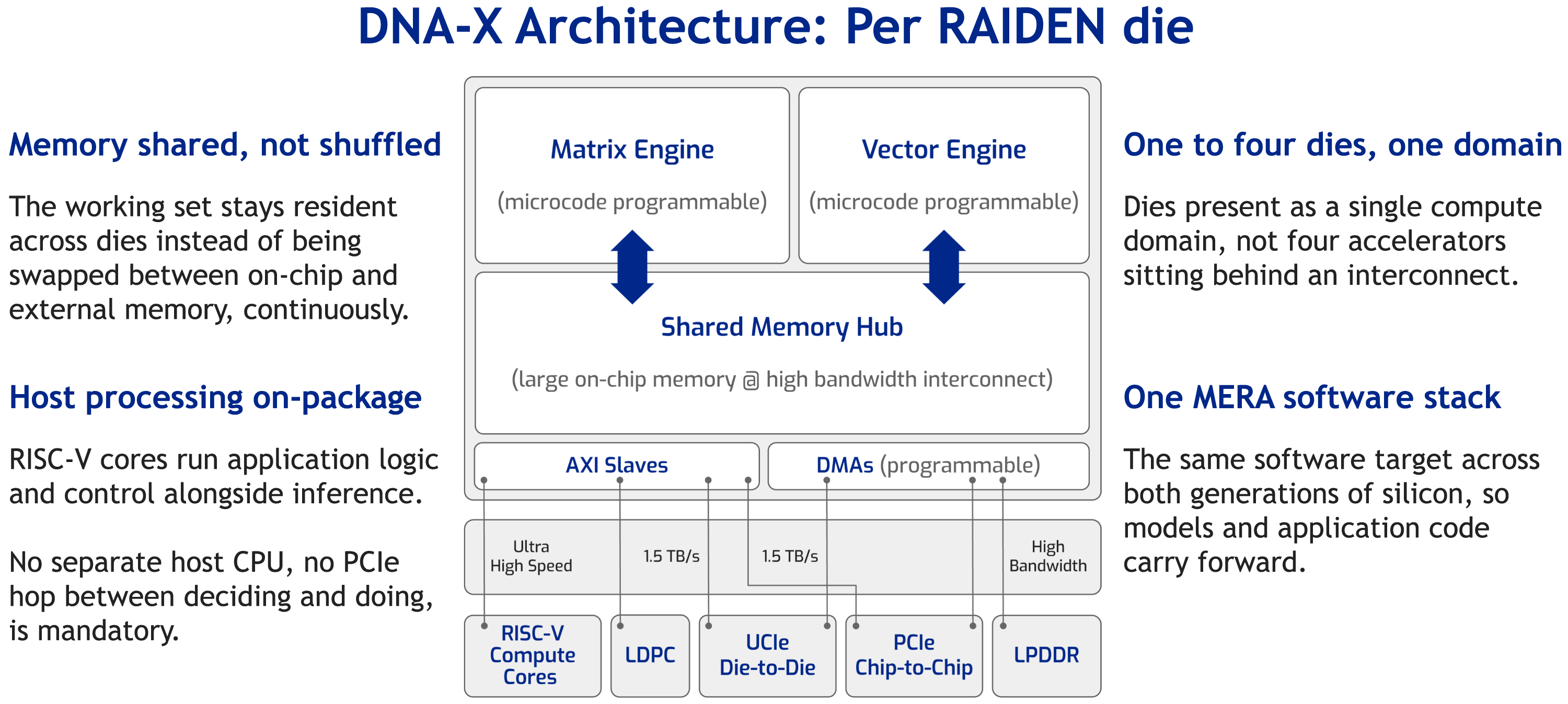
Figure 4: One programmable, scalable, heterogeneous system, not just a collection of accelerators.
From a product roadmap to an infrastructure architecture
This is where the chiplet thesis and the distributed Physical AI thesis begin to converge. The same philosophy can scale inwards, by composing more capable systems from multiple dies, and outwards, by deploying those systems across servers, racks, and modular infrastructure closer to where the physical world is operating.
I believe the eventual architecture of AI will look less like a choice between cloud and edge and more like a continuum. Enormous centralized infrastructure will support training and workloads that benefit from concentration. Increasingly intelligent machines will operate at the very edge. Between them, I expect a substantial layer of distributed Physical AI infrastructure to emerge across factories, telecommunications networks, aerospace and autonomous systems, cities and other operating environments.
The industry is already shifting to a more layered approach for Physical AI. In robotics, it’s now common to separate training, simulation, and real-world operation. The next big question is how much intelligence we can move into real-world environments in a cost-effective and reliable way. We believe the middle layer between smart machines and the big cloud i.e. the Thick Edge, will become very important.
At EdgeCortix, we don’t believe every workload should run at the edge. That’s not our claim. Our job is to create an architecture flexible enough for customers to put intelligence where it’s really needed, without being limited by a narrow accelerator or outdated software when models change.
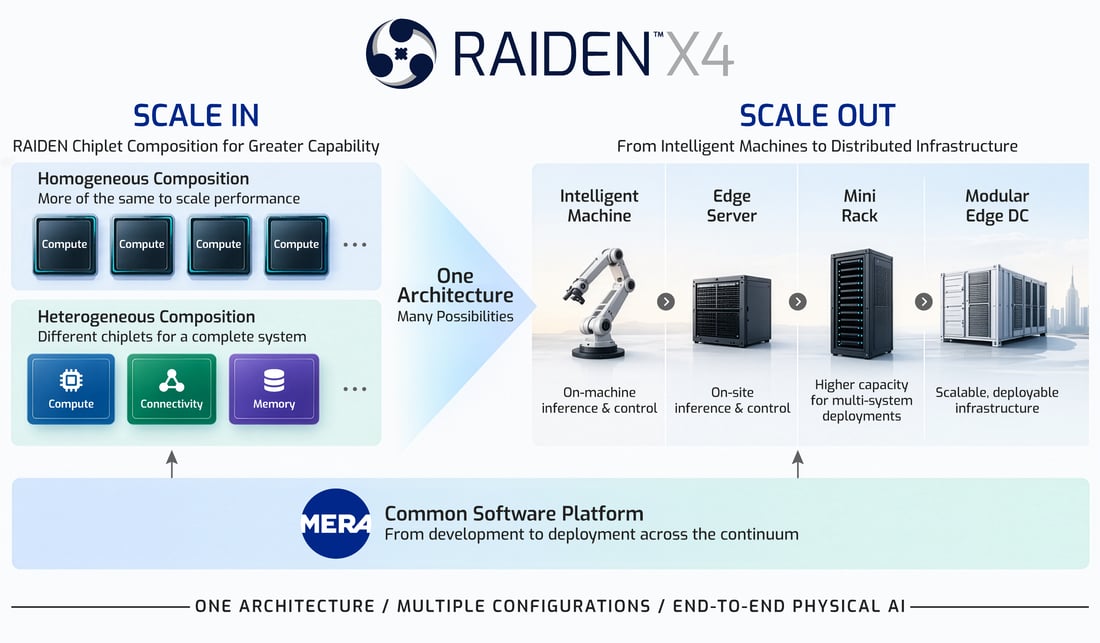
Figure 5: Physical AI scales in and scales out. Chiplet composition enables increasingly capable systems, while a common architecture and software layer extends that intelligence from individual machines to distributed edge infrastructure.
Why this moment matters to me
As a founder, one of the best parts of building a deep-tech company is seeing ideas that started as strong beliefs turn into choices customers want to build on. RAIDEN already has customer design wins secured even before the silicon starts shipping and our new multi-year partnership with Kawasaki Heavy Industries is a great example. This matters to me because customers building long-lasting systems don’t make these decisions lightly.
At the same time, I know RAIDEN is just the start of this new phase for EdgeCortix. We still have a lot to do. The new chips will become real products, the software will grow with them, and customer designs will move into use. But our direction is clear: Physical AI means thinking beyond just the accelerator and focusing on the whole computing system and its supporting infrastructure.
The first era of modern AI infrastructure showed us how to concentrate huge amounts of intelligence. I think the next era will show us how to spread that intelligence efficiently across the real world. If we’re right, success won’t be about just one TOPS or TFLOPS number. It will be about architectures that adapt as models change, scale to different environments, cut down on unnecessary data movement, and bring more of the sensing-to-action process together in one system.
That’s why we built RAIDEN, and why chiplets are now so important to EdgeCortix’s future. We’re working toward a world where Physical AI can grow in every direction, and where the computing platform does much more than just run a single model. There’s still a lot to do, but this is the path we believe in, and RAIDEN is a big step forward.
Learn more about RAIDEN
Explore the RAIDEN platform, architecture and product family.
EXPLORE RAIDEN: https://www.edgecortix.com/en/products/raiden
Read the Announcement
Read EdgeCortix's official RAIDEN launch announcement.
RAIDEN PRESS RELEASE: https://www.edgecortix.com/en/press-releases/edgecortix-unveils-raiden-a-scalable-energy-efficient-ai-chiplet-platform-purpose-built-for-physical-ai